
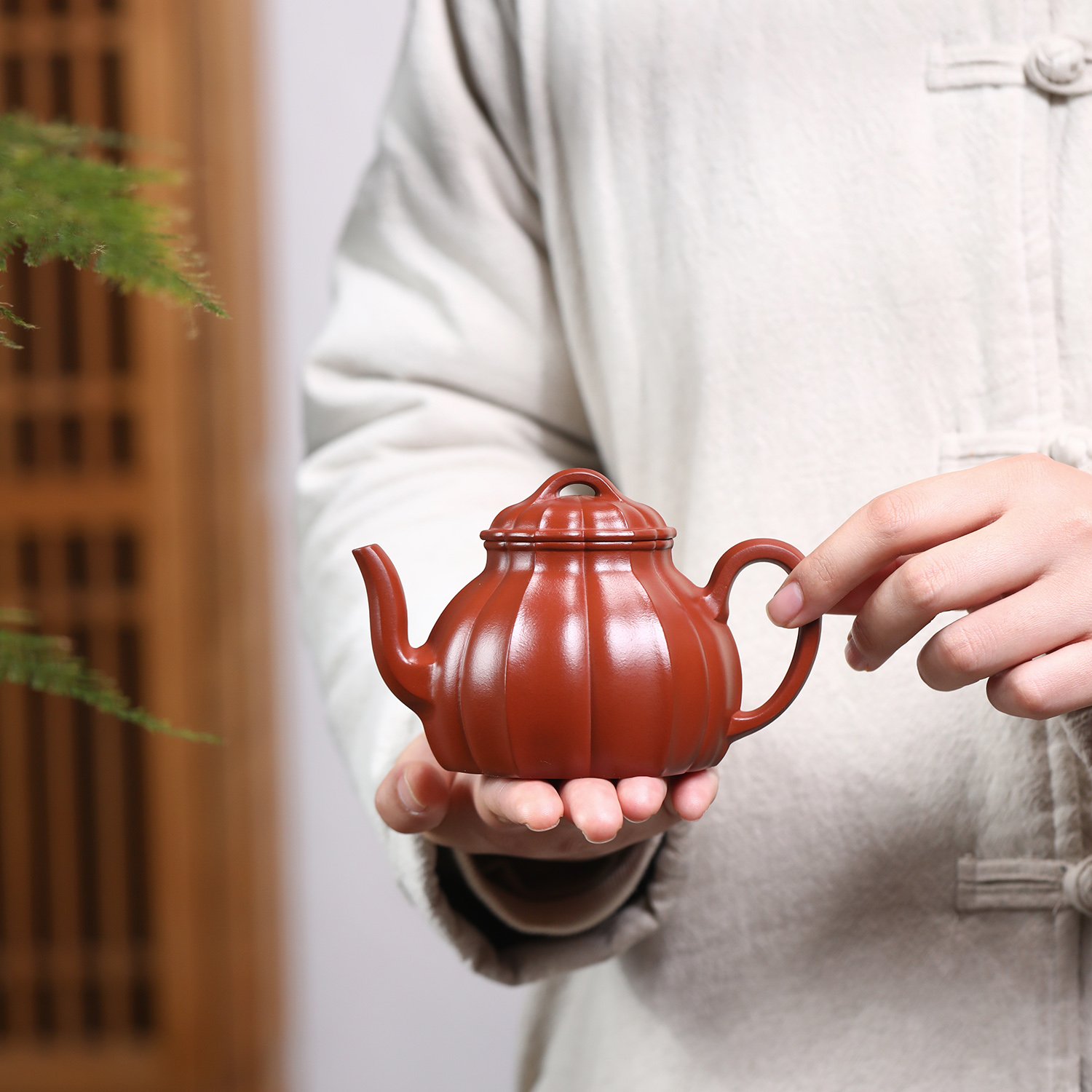
What is the "sand" of the purple clay pot?
What is the "sand" of the purple clay pot?
If you want to appreciate the "beauty of sand", you must first understand three things:
1. What is the difference between "sand" and "sand"?
2. What does purple sand mean by "sand"?
3. The role of sand?
First, the difference between "sand" and "sand"
① Similarities:
Sand and sand are similar in meaning, both referring to stone particles with a granular state and other substances similar in shape to such stones.
② Difference:
"Sand" : usually refers to very fine stone grains, which are related to nature, weather and meteorology.
For example: wind sand, dust storms, deserts, beaches, etc., "sand" can be blown by strong winds because it is very fine.
Related to sound or sound is not loud, with "sand", hoarse, sand throat, rustling and so on.
"Sand" : usually refers to the fine stone, usually related to engineering, minerals, manufacturing, "sand".

For example: cement mortar, emery, purple sand, cinnabar, sandpaper, grinding wheel, river sand.
Generally refers to a finely broken material such as sand, such as sugar, casserole, etc.
Second, what does the "sand" of purple sand mean?
For the definition of sand, there are usually two factions:
1. Academic
Academics believe that sand refers to quartz particles.
Chemically, in terms of composition, they are quartz particles. In fact, this is the "bone" in the empirical school that purple sand mud "has bone".
2. Empirical
The empirical school believes that sand refers to the physical unity of purple sand mud.
This physical structure naturally has a reasonable composition of mud and sand, in which sand plays a crucial role.
The ancients said, "Mud is meat, sand is bone." The "bone" and "sand" also refer to the quartz, mica mineral particles and non-weathered clay aggregates in the purple sand mud, and the quartz determines the physical properties of the sand. Different purple sand contains different quartz. Quartz has high density and high melting point, which can improve the sintering temperature of purple sand. At the same time, many of the characteristics of purple sand are closely related to the quartz composition. The open porosity structure of the burnt product is the space between the quartz particles (and its solidarity); The closed stomatal structure is the void inside the quartz particles and their aggregates. This constitutes the "double porosity structure" of purple sand.
Third, what is the role of sand?
First, make the finished product have obvious use effect
Stomatal structure determines the effect of use.
In order to make up for the shortcomings of some minerals themselves, it is necessary to add minerals with high quartz content, the most common is "black pier head" and "white pockmark", in order to improve the quartz content in the body and increase the ratio of open pores in the body.
Second, reduce the production technology, improve the firing rate.
There is a type of mineral that cannot be added to the above two minerals, which is small red mud (including its fine red mud), because the two minerals will change the color of the finished product.
Small red mud belongs to the clay class, shrinkage is large, making and firing more difficult.
In order to reduce the difficulty, the mud is pre-treated: raw sand or cooked sand is made, and then added.
The red clay works with obvious wrinkles indicate that the maker has a high level of skill, because he can solve the difficulty of the process without using mud pretreatment. Sand blending with red mud can reduce the shrinkage ratio and increase the yield.
